Tuberculosis (TB) is a serious infectious disease that mostly affects the lungs, but it can also spread to other parts of the body such as the bones, brain, lymph nodes, and kidneys. It is caused by a slow-growing bacterium called Mycobacterium tuberculosis. TB has existed for centuries and is still one of the leading infectious diseases globally. It spreads easily in crowded environments and places where healthcare resources are limited. However, it is treatable and preventable if diagnosed early and treated correctly.
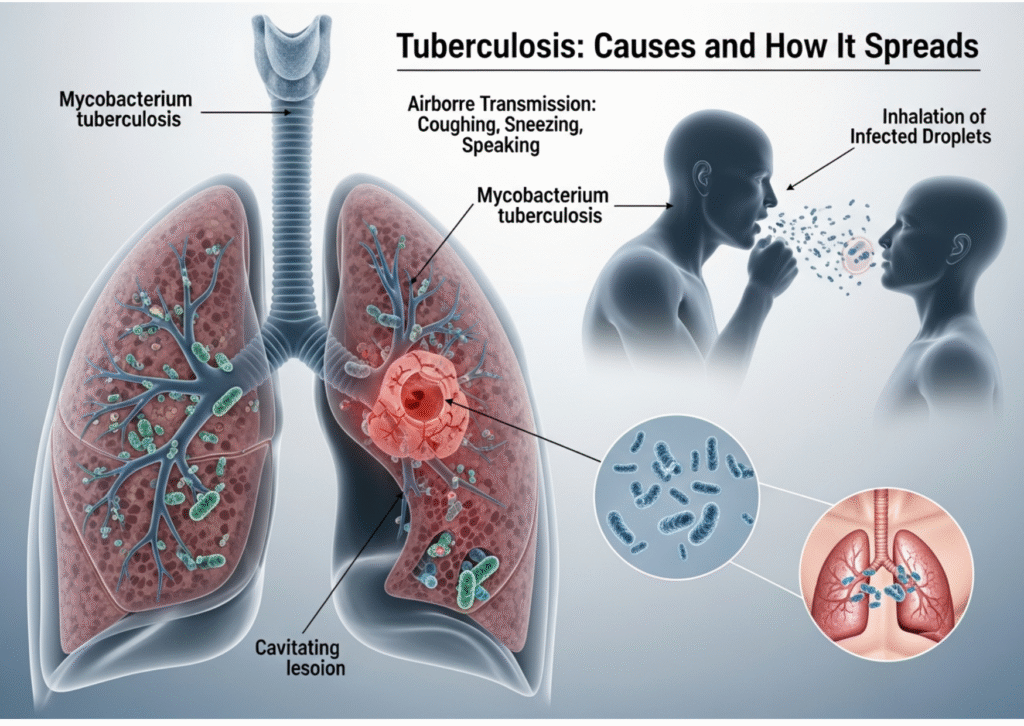
TB remains common in areas where people live in close groups, have poor nutrition, or lack proper awareness and treatment facilities. People with weak immune systems (especially those with HIV/AIDS, diabetes, or those undergoing cancer treatment) are more likely to develop active TB.
How Tuberculosis Spreads
TB spreads through the air. When a person who has active TB in the lungs coughs, sneezes, talks, laughs, or even breathes, tiny droplets containing TB bacteria are released into the air. If another person inhales these droplets, the bacteria can enter their lungs.
However, not everyone who breathes in TB bacteria becomes sick. The body’s immune system plays an important role in controlling the infection. TB infection appears in two forms:
Also read about this: Tuberculosis
| Type | Description | Symptoms | Infectious? |
| Latent TB (Hidden) | Bacteria remain in the body but are inactive | No symptoms | No |
| Active TB (Disease) | Bacteria multiply and cause illness | Cough, fever, weight loss, etc. | Yes |
When TB affects the lungs, it is called Pulmonary TB, which is the main source of spread. When TB affects other organs (like bones, brain, or kidneys), it is known as Extrapulmonary TB.
Causes and Risk Factors
TB does not spread by handshake, sharing food, water, utensils, clothes, or physical touch — only through air droplets.
The risk of developing TB increases when:
- A person lives or works with someone who has active TB
- The immune system is weak (HIV/AIDS, cancer treatment, long-term steroid use, diabetes)
- A person does not receive proper nutrition or is severely underweight
- Living in damp, overcrowded homes or poorly ventilated rooms
- Smoking, drug use, or heavy alcohol consumption damages lung health
- Not receiving the BCG vaccination, which provides early protection
Symptoms of Active Tuberculosis
TB symptoms may start slowly and can be mistakenly ignored. Early detection is very important.
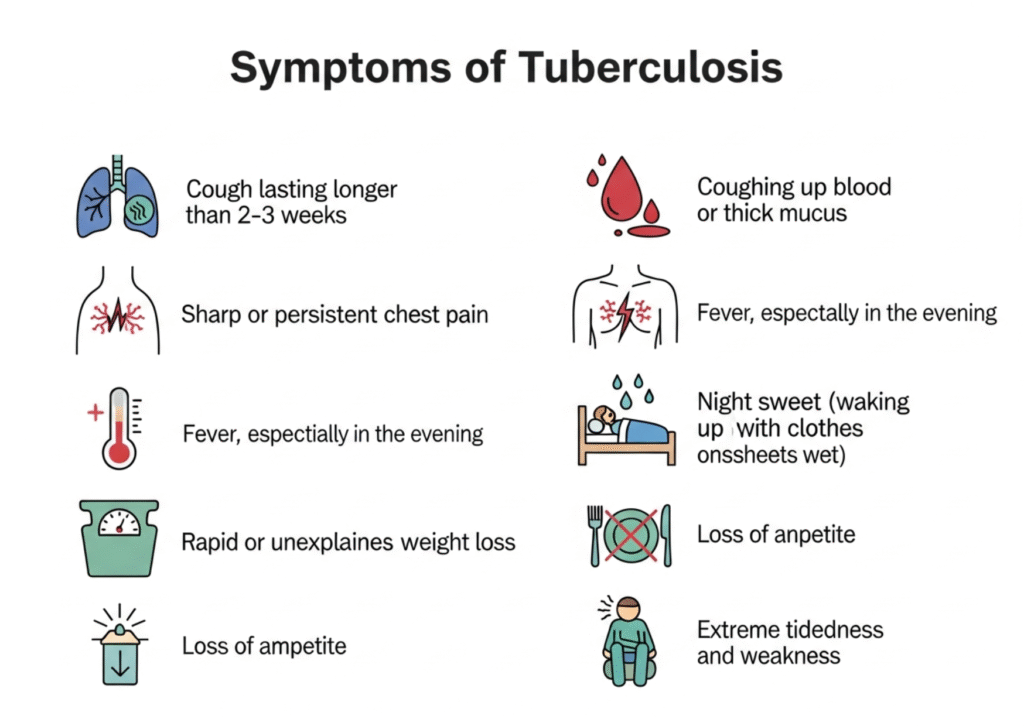
Common symptoms include:
- Cough lasting longer than 2–3 weeks
- Coughing up blood or thick mucus
- Sharp or persistent chest pain
- Fever, especially in the evening
- Night sweats (waking up with clothes or bedsheets wet)
- Rapid or unexplained weight loss
- Loss of appetite
- Extreme tiredness and weakness
If these symptoms appear and persist, immediate medical checkup is necessary.
Types of TB
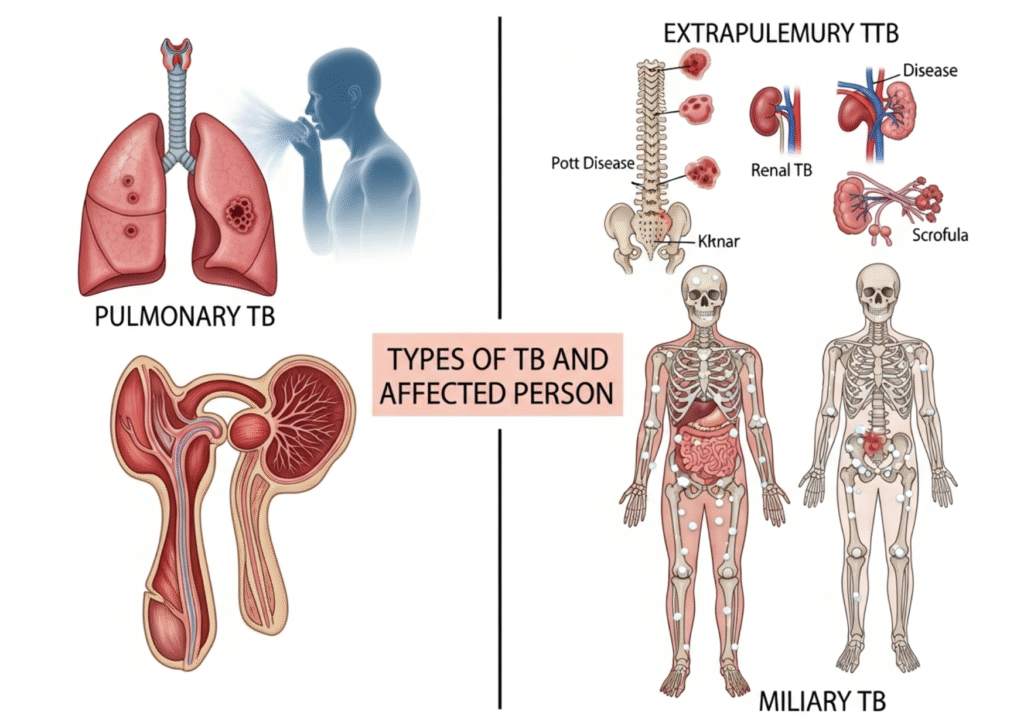
- Pulmonary TB
Affects the lungs and is most contagious. Causes chronic cough and breathing difficulty. - Extra pulmonary TB
Affects other organs such as:- Bones and joints → causing back or joint pain
- Kidneys → blood in urine
- Brain (TB meningitis) → severe headache, vomiting, confusion
- Lymph nodes → swelling in the neck or underarms
- Miliary TB
A rare but severe form where TB spreads throughout the body. Needs urgent treatment.
Diagnosis of Tuberculosis
Doctors diagnose TB using:
- Medical history and symptom evaluation
- Chest X-ray or CT scan to check lung damage
- Sputum Test / GeneXpert Test to detect TB bacteria
- Tuberculin Skin Test (TST / Mantoux Test) to check for latent TB
Early diagnosis prevents complications and stops transmission.
Remember: https://healthytipspro.com/menstruation-cycle-all-about-periods/
Treatment of TB
TB treatment is effective, but requires strict completion. The usual treatment lasts at least 6 months and involves a combination of anti-TB antibiotics taken daily. This is often done under DOTS (Directly Observed Treatment Strategy) to ensure patients take medicines regularly.
Key points about treatment:
- Do not stop medication early, even if symptoms improve.
- Skipping medicines can lead to Drug-Resistant TB, which is harder to treat.
- Drug-resistant TB may require stronger medications for 18–24 months.
Patients should also:
- Eat nutrient-rich food (protein, iron, vitamins)
- Avoid smoking and alcohol
- Rest adequately
- Drink plenty of water
- Attend all follow-up visits
Prevention of TB
- BCG vaccine for newborns helps protect against severe TB in childhood.
- Early diagnosis and treatment of active TB patients reduces spread.
- Ensure good ventilation in homes and workplaces.
- Use masks in hospitals or high-risk areas.
- Maintain strong immunity through healthy diet and regular exercise.
- Avoid close contact with untreated TB patients.
Role of Doctors in TB Diagnosis, Treatment, and Management
| Type of Doctor | Role / Responsibilities | When You Should Visit |
| General Physician (MBBS Doctor) | Performs initial examination, evaluates symptoms, orders sputum and X-ray tests, and refers to specialists if needed. | When you have cough for more than 2 weeks, fever, or weight loss. |
| Pulmonologist (Chest Specialist) | Diagnoses and treats Pulmonary TB, monitors lung function, manages breathing-related complications. | If TB affects your lungs or breathing becomes difficult. |
| Infectious Disease Specialist | Handles complex TB cases, especially drug-resistant TB, ensures proper medication combinations. | When TB is not improving with standard treatment or is MDR/XDR TB. |
| Pediatrician | Manages TB in children, ensures proper dosage adjustment and growth monitoring. | If the patient is a child or adolescent. |
| Radiologist | Interprets chest X-rays and CT scans to confirm extent of disease. | When imaging tests are required for diagnosis or progress tracking. |
| Pathologist / Lab Technician | Conducts sputum smear, GeneXpert, culture tests to confirm TB bacteria. | During diagnosis and follow-up sputum reports. |
| Nutritionist / Dietitian | Builds a high-protein, immunity-boosting meal plan to support recovery. | When weakness, weight loss, or poor appetite occurs. |
| Counselor / Psychologist | Provides emotional support, encourages treatment compliance, reduces stress and stigma. | When stress, depression, or social fear affects treatment. |
Diet Chart for TB Patients (Simple & Practical)
| Meal Time | Foods to Include | Purpose |
| Early Morning | Warm water + Honey / 1 Banana | Boost energy & digestion |
| Breakfast | Whole wheat bread or oats + Boiled egg / Peanut butter + Milk | High protein & energy |
| Mid-Morning Snack | Seasonal fruit (Apple, Papaya, Orange) | Vitamins to support immunity |
| Lunch | Rice/Chapati + Dal + Cooked Vegetables + Curd | Balanced nutrition for body repair |
| Evening Snack | Nuts (Almonds, Walnuts, Peanuts) or Sprouts | Healthy fats & protein |
| Dinner | Chapati + Lentils / Chicken soup + Vegetables | Easy-to-digest, nourishing meal |
| Before Bed | Warm Milk + Turmeric | Helps reduce inflammation & improves recovery |
Nutrition Tips for TB Patients
- Eat small frequent meals (4–6 times daily)
- Drink plenty of water
- Add Protein-rich foods: eggs, milk, pulses, chicken, paneer, fish
- Avoid junk food, cold drinks, and smoking
- Rest well to help the body heal
Conclusion
TB is a curable disease, but early detection and complete treatment are absolutely necessary. Awareness plays a major role in preventing the spread of tuberculosis. If someone has a cough lasting more than two weeks, night sweats, or unexplained weight loss, they should seek medical attention immediately. With timely diagnosis, correct medication, good nutrition, and community support, TB patients can recover fully and lead healthy lives.
Remember:
A cough that lasts long is not just a cough. It may be TB. Get tested, get treated, and stay safe.
Appoint Doctor:
Book Your Appointment with a Specialist Today: Click Now Pulmonologist
Is Tuberculosis Curable?
Yes. TB is completely curable with the full 6-month antibiotic treatment. The most important thing is to complete the treatment, even if you start feeling better early.
Can Tuberculosis Spread Through Touch or Sharing Food?
No. TB does not spread through shaking hands, sharing utensils, food, or water. It spreads only through the air when a person with active lung TB coughs, sneezes, or talks.
What Is the Difference Between Latent and Active TB?
Latent TB: Bacteria are present but inactive. No symptoms. Not contagious.
Active TB: Bacteria are active and multiplying. Symptoms appear. Contagious and requires immediate treatment.
Who Is at Higher Risk of Developing TB?
People with weak immune systems, such as those with HIV/AIDS, diabetes, malnutrition, or those living in crowded conditions, are at greater risk.
Why Is Completing TB Treatment So Important?
If treatment is stopped early, the bacteria can become drug-resistant, leading to MDR-TB (Multi-Drug-Resistant TB), which is much harder and longer to treat.
Pingback: Weight Loss Diet Plan - Health Tips