Nutrition is one of the most important parts of living a healthy and balanced life. Everything we eat becomes a part of our body from our muscles and bones to our skin, hair, and even our thoughts and mood. When we choose foods that nourish us, we give our bodies the support they need to work well, stay strong, and feel good every day. Understanding nutrition helps us make those choices more confidently and with purpose.
What Is Nutrition and Why Is It Important?
Nutrition is the process of giving the body the nutrients it needs to function. These nutrients include carbohydrates, protein, fats, vitamins, minerals, and water. Each type of nutrient plays an important role in keeping us healthy:
- Carbohydrates provide energy for daily activities.
- Proteins help build muscles and repair tissues.
- Healthy fats support the brain, hormones, and cell health.
- Vitamins and minerals help the body’s systems work smoothly, including the immune system and nervous system.
- Water keeps every cell hydrated and functioning properly.
The body needs a balance of all these nutrients not too much of one and too little of another. This balance is what we call good nutrition. When we eat well, we can think more clearly, move more easily, maintain a healthy weight, and reduce the risk of long-term diseases like diabetes, high blood pressure, heart disease, and certain cancers.
Good nutrition is not just about avoiding illness, it is about feeling your best having stable energy, a positive mood, better sleep, and a stronger immune system.
Also read about this: Nutrition
What Foods Are Healthy?
Healthy foods are generally those that come from natural sources and are not heavily processed. These foods tend to contain the nutrients our bodies need without too much added sugar, salt, or unhealthy fats.
Here are some key groups of healthy foods:
| Food Group | Examples | Why They Help |
| Fruits & Vegetables | Apples, bananas, carrots, leafy greens, berries | High in vitamins, minerals, fiber, and antioxidants |
| Whole Grains | Oats, whole wheat bread, brown rice, barley | Provide steady energy and support healthy digestion |
| Lean Proteins | Chicken, fish, eggs, beans, lentils, tofu | Help build and repair body tissues |
| Healthy Fats | Avocado, olive oil, nuts, seeds | Support brain function and heart health |
| Hydration | Water, herbal teas | Maintains energy, skin health, and digestion |
Simple daily meal ideas:
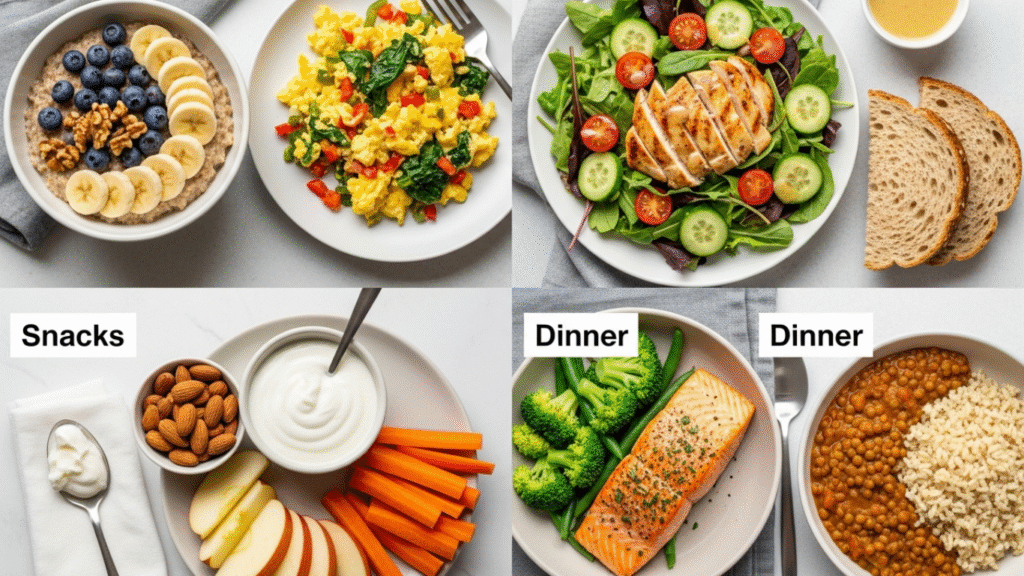
- Breakfast: Oatmeal topped with fruit, or scrambled eggs with vegetables.
- Lunch: Grilled chicken or chickpea salad with whole grain bread.
- Snacks: A handful of nuts, yogurt, sliced fruit, or carrot sticks.
- Dinner: Baked fish or lentil curry with steamed vegetables and brown rice.
Healthy eating does not need to be complicated. It is about choosing foods that make you feel energized and satisfied, not heavy or tired.
Remember: https://healthytipspro.com/weight-loss-diet-plan/
Should You Take Daily Vitamins?
Daily vitamins can be helpful, but they are not always necessary. If a person eats a balanced diet with a variety of foods, they usually get most of the vitamins their body needs.
However, some people may benefit from daily vitamins:
- Individuals with restricted diets (like vegetarians or vegans).
- People with poor appetite or irregular eating habits.
- Those with certain medical conditions affecting absorption.
- Pregnant or breastfeeding women (as recommended by a doctor).
Vitamins are most helpful when they fill gaps, not when they replace real food. Whole foods provide fibers and antioxidants that supplements alone cannot match. So, while multivitamins can support health, they should not be seen as a “shortcut” to good nutrition.
Should You Take a Daily Supplement?
Supplements are different from multivitamins because they usually provide one specific nutrient. Common supplements include:
- Vitamin D (especially for people with limited sun exposure)
- Calcium (for bone health)
- Vitamin B12 (important for nerve and blood health)
- Iron (helps prevent anemia)
- Omega-3 (supports heart and brain health)
These supplements can be very helpful when levels are low. However, taking supplements when you don’t need them can be unnecessary or even harmful.
It’s best to speak with a doctor or nutritionist before starting supplements, especially if you have a medical condition, are pregnant, or are taking medications.
Nutrition for Older Adults
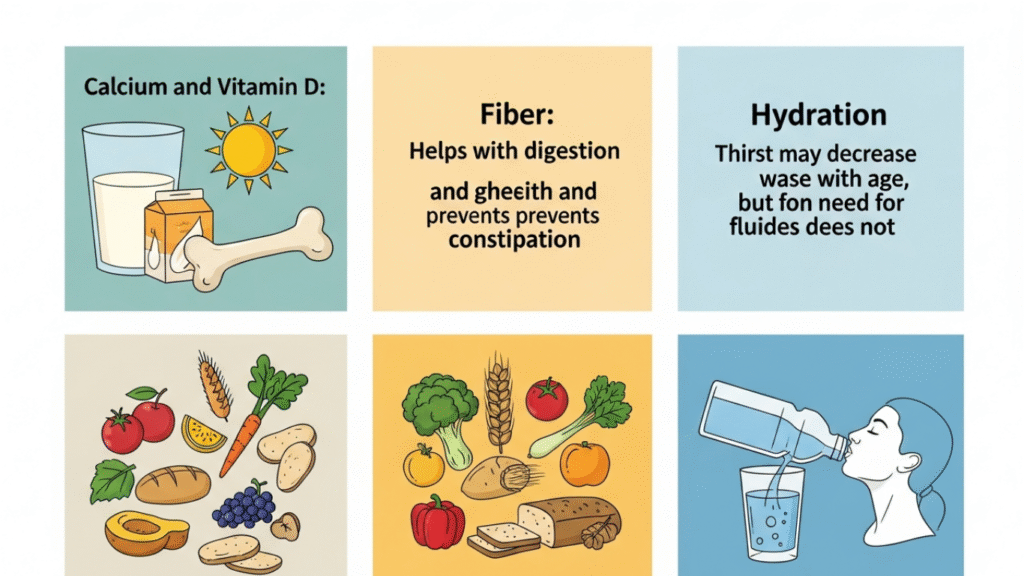
As we age, our nutritional needs change. The body may require more of certain nutrients and less of others.
Protein: Helps maintain muscle strength and prevent muscle loss.
- Calcium and Vitamin D: Support bone health and help prevent osteoporosis.
- Fiber: Helps with digestion and prevents constipation.
- Hydration: Thirst may decrease with age, but the need for fluids does not.
Helpful meal ideas for older adults:
- Soft scrambled eggs with vegetables.
- Oatmeal with bananas and a spoon of peanut butter.
- Yogurt or milk for calcium.
- Steamed vegetables with fish, lentils, or beans.
- Smoothies made with fruits and yogurt for easy digestion.
Small, nutrient-dense meals are often easier to manage and digest.
Meal Prep Ideas
Meal prep can make healthy eating much easier, especially for busy days.
Here are some simple tips:
- Cook in batches: Make a large pot of soup, rice, beans, or grilled chicken and store portions in containers.
- Use balanced plates: Half vegetables, one quarter protein, and one quarter whole grains.
- Store healthy snacks: Nuts, fruit, yogurt, boiled eggs, and pre-cut vegetables.
- Keep water nearby: Staying hydrated improves energy and mood.
Weekly meal prep example:
- Cook a batch of brown rice and refrigerate.
- Grill or bake chicken, tofu, or fish for the week.
- Cut vegetables and store them in airtight containers.
- Prepare healthy snacks like boiled eggs and fruit cups.
These small steps save time and keep you from choosing unhealthy convenience foods.
Healthy eating is a journey, not a race. You don’t need to change your entire diet overnight. Start with one small step add one more fruit, drink one extra glass of water, or swap a sugary snack for a healthier one. Over time, these simple habits become a lifestyle that supports your well-being, energy, and happiness.
Doctor’s Role in Nutrition
Doctors and nutrition experts play an important role in helping people understand what their bodies need to stay healthy. While general nutrition advice can benefit many people, every individual is different. A doctor can identify what your body specifically requires based on your health, lifestyle, age, and medical history.
Identifying Nutritional Deficiencies: Doctors can run blood tests to check levels of nutrients like iron, vitamin D, vitamin B12, calcium, and more. This helps find out if the body is missing something essential.
Providing Personalized Nutrition Advice: Not everyone needs the same diet. A doctor or dietitian can recommend meal plans tailored to conditions like diabetes, high cholesterol, anemia, obesity, or digestive problems.
Guiding Safe Supplement Use: Many people take supplements without knowing whether they actually need them. Doctors can help determine:
- Which supplements are useful
- What amount is safe
- How long they should be taken
This prevents overuse, which can be harmful.
Monitoring Progress: If you are trying to lose weight, build muscle, or manage a health condition, a doctor can track progress and make necessary adjustments to your diet and lifestyle goals.
Supporting Long-Term Wellness: Doctors encourage healthy habits that fit into daily life instead of quick fixes. They focus on sustainable changes that protect your long-term health.
When Should You See a Doctor About Nutrition?
You should consider consulting a healthcare professional if you experience:
- Unexplained weight loss or weight gain
- Constant fatigue or weakness
- Hair loss, brittle nails, or dry skin
- Frequent illnesses or infections
- Changes in appetite or digestion
A doctor can help discover the cause and guide you toward the right nutrition plan
Remember:
Your body is the only home you will live in for your entire life treat it with care, feed it with love, and nourish it with purpose.”
Appoint doctor:
If you have symptoms of poor nutrition or need a personalized diet plan, consult a doctor or nutritionist for guidance.
Book Your Appointment Here: Nutritionist
How do I know if I am getting proper nutrition?
If you feel energized, maintain a stable weight, rarely get sick, and your hair, skin, and mood feel healthy, it’s a sign your nutrition is balanced. However, a doctor’s check-up and routine blood tests can confirm your nutrient levels more accurately.
Can I be healthy without following a strict diet?
Yes. Good nutrition does not mean giving up all foods you enjoy. It’s about balance, portion control, and choosing whole, natural foods most of the time while limiting processed and sugary foods.
Are supplements necessary for everyone?
Not always. Many people get enough nutrients from their diet. Supplements are helpful only if you have a deficiency, limited food intake, or a health condition. Always check with a doctor before starting supplements.
How much water should I drink daily?
Most adults benefit from about 6–8 glasses of water per day. However, needs vary based on climate, activity, and health. The best sign of hydration is light-colored urine and feeling refreshed.
What is one simple change I can make to start eating healthier?
Begin by adding one extra serving of vegetables or fruit each day and drinking more water. Small, consistent changes are easier to maintain and have a big impact over time.
Pingback: Diabetes - Health Tips
After looking into a few of the articles on your website,
I truly like your technique of writing a blog. I saved it to my bookmark website list and will be checking back soon. Please check out my website as well and
tell me how you feel.
Link exchange is nothing else except it is just placing the other
person’s weblog link on your page at appropriate
place and other person will also do same in support of
you.