Mental Disorder Illness affects how we think, feel, act, and make decisions. When the mind is not functioning normally, a person may develop what is called a mental disorder. These conditions can change emotions, mood, behavior, and communication. Mental disorders can happen to children, teenagers, adults, and older people.
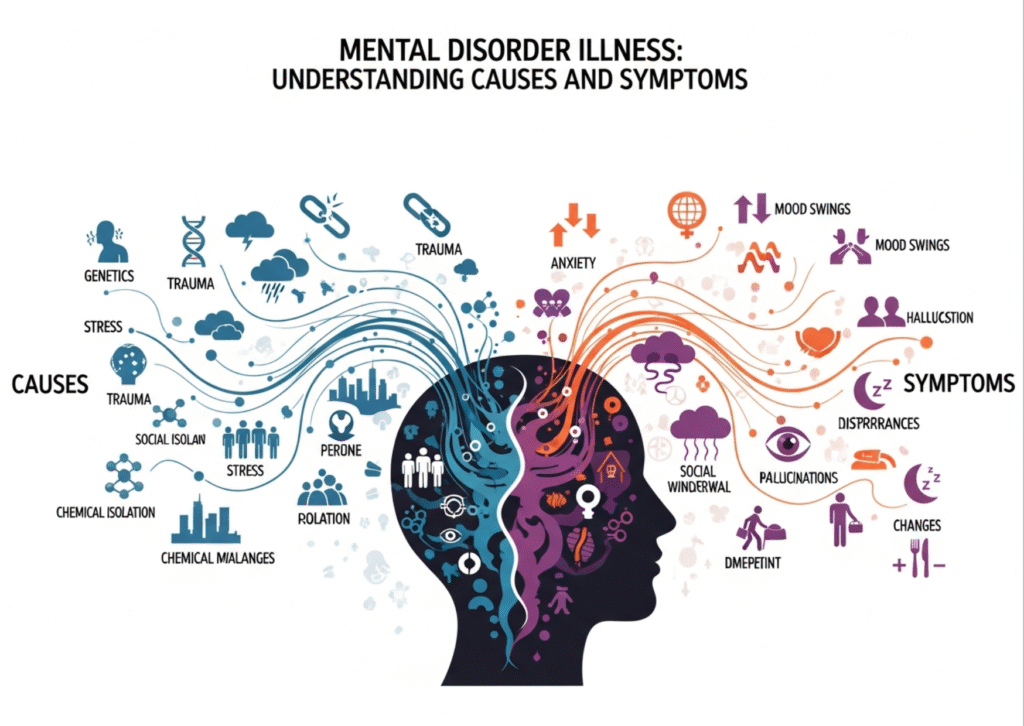
In today’s world, stress, pressure, fast lifestyle, and emotional struggles are increasing. Because of this, mental disorders are becoming more common but many people still hesitate to talk about them. Mental illness is not a weakness, it is a medical health condition that needs proper care and support.
Why Do Mental Disorder Illness Occur?
Mental disorders have multiple causes, not just one. The most common medical reasons include:
| Factor | Medical Explanation |
| Genetics | Some mental disorders run in families. |
| Brain Chemical Imbalance | The brain uses chemicals (neurotransmitters). When these become unbalanced, mood and behavior can change. |
| Stress and Trauma | Emotional shock, abuse, or sudden tragic events can cause long-lasting mental effects. |
| Environment | Peer pressure, work stress, poverty, and social problems can increase risk. |
| Chronic Illness | Long-term physical illnesses affect mental health. |
| Substance Misuse | Alcohol, drugs, and sleeping pills can trigger or worsen mental disorders. |
Important:
Mental disorders are not caused by being weak, lazy, or “not strong enough.” They are medical conditions.
Remember: https://healthytipspro.com/lifestyle-diseases-effects-of-daily-habits-on-your-health/
Common Symptoms of Mental Disorder Illness
A person with a mental disorder may show one or more of these symptoms:
- Constant sadness or crying
- Worry, fear, or panic
- Mood swings (very happy → very sad)
- Feeling tired, weak, or empty
- Not interested in daily activities
- Withdrawing from family or friends
- Problems sleeping (too much or too little)
- Eating too much or too little
- Difficulty focusing or remembering
- Seeing or hearing things others cannot (in severe cases)
If these symptoms last more than 2 weeks, medical help should be sought.
Also read about this more: Mental Disorder Illness
Types of Mental Disorder Illness and How Many People Are Affected Worldwide
Mental disorders are medical conditions that affect the brain, influencing how a person thinks, feels, behaves, and manages daily life. These disorders occur in every age group and culture. The World Health Organization (WHO) estimates that over 1 billion people are currently living with some form of mental illness.
Below are the major categories explained simply:
Perfect you want each disorder explained in a paragraph, but the line showing how many people suffer should appear at the start of each paragraph as a clear point.
Here is the corrected and improved version:
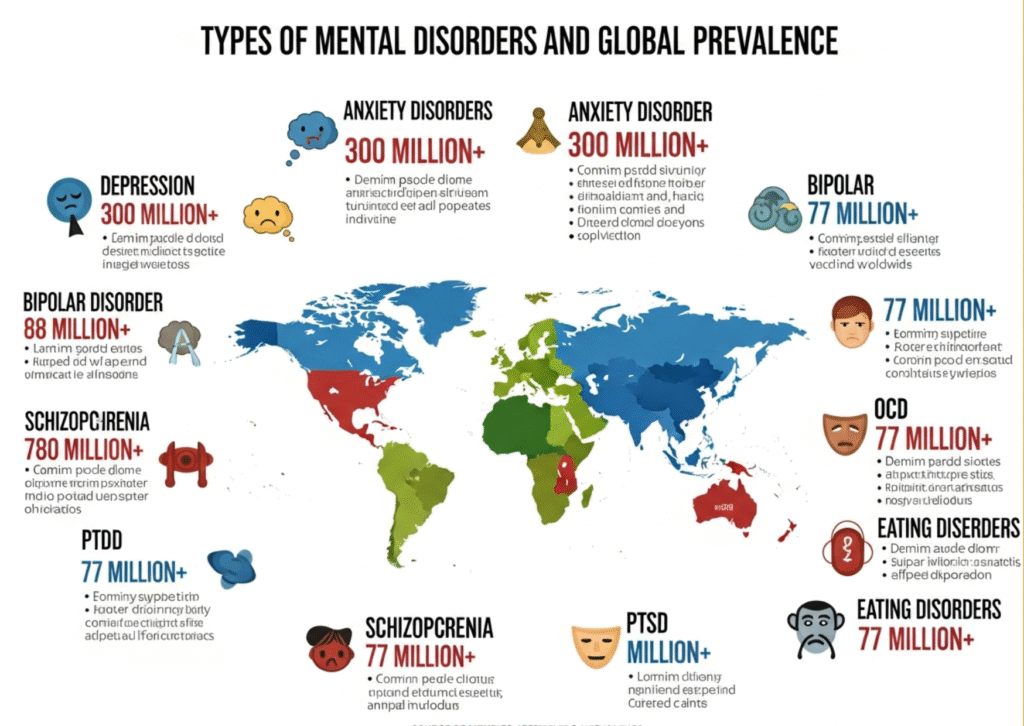
Anxiety Disorders
Suffering Worldwide: More than 300 million people are affected by anxiety disorders globally.
Anxiety disorders occur when feelings of worry or fear become constant, intense, and difficult to control. People may feel nervous, tense, or panicked even when there is no real danger. Symptoms often include rapid heartbeat, sweating, shaking, restlessness, or difficulty concentrating. Common types include Generalized Anxiety Disorder, Panic Disorder, Social Anxiety Disorder, and various phobias. With therapy and proper medical support, anxiety disorders can be effectively managed.
Depressive Disorders
Suffering Worldwide: Over 280 million people live with depressive disorders.
Depression causes persistent sadness, low mood, and loss of interest in daily activities. It can affect appetite, sleep, memory, and energy levels. People may feel hopeless, tired, or withdrawn from others. Examples include Major Depressive Disorder and Dysthymia. Depression is not a weakness it is a medical condition involving brain chemistry and life events. Treatment involves talk therapy, emotional support, lifestyle improvement, and sometimes medication.
Bipolar Disorder
Suffering Worldwide: About 60 million people experience bipolar disorder.
This condition involves extreme mood shifts between mania (high energy, excitement, reduced sleep) and depression (sadness, low energy, fatigue). These mood changes can affect work, school, relationships, and decision-making. Bipolar disorder often has genetic and chemical causes. With medication, therapy, and routine habits, individuals can maintain stable and healthy lives.
Schizophrenia and Psychotic Disorders
Suffering Worldwide: Around 24 million people have schizophrenia.
Schizophrenia affects the way a person thinks, feels, and interprets reality. People may hear voices, see things that are not real, or believe things that are false (delusions). Speech and thoughts may become confused or disorganized. This condition requires ongoing medical treatment, supportive therapy, and family understanding. Early treatment greatly improves outcomes.
Obsessive-Compulsive Disorder (OCD)
Suffering Worldwide: 150–200 million people experience OCD.
OCD causes repetitive, unwanted thoughts called obsessions, and repeated behaviors called compulsions. For example, someone may wash their hands many times due to fear of germs, or repeatedly check locks. These habits become difficult to control and interfere with daily life. Treatment includes Cognitive Behavioral Therapy (especially ERP) and sometimes medication.
Post-Traumatic Stress Disorder (PTSD)
Suffering Worldwide: 1 in every 11 people will experience PTSD.
PTSD develops after trauma such as accidents, violence, abuse, or natural disasters. People may have nightmares, flashbacks, and emotional numbness. The body stays in “alert mode,” making it hard to relax or feel safe. Therapy focusing on trauma can help recover emotional balance.
Eating Disorders
Suffering Worldwide: More than 70 million people have eating disorders.
These disorders involve extreme thoughts and behaviors related to food and body image. Anorexia involves severe restriction of food. Bulimia involves cycles of overeating and purging. Binge Eating Disorder involves repeated overeating. These conditions affect physical health and self-esteem. Treatment includes nutritional care and psychological therapy.
Personality Disorders
Suffering Worldwide: About 9% of people globally have personality disorders.
These disorders involve long-term patterns of difficult emotions and behaviors. For example, Borderline Personality Disorder causes rapid emotional changes and unstable relationships. Antisocial Personality Disorder involves lack of empathy and disregard for rules. Treatment includes long-term psychotherapy, emotional regulation training, and supportive care.
Neurodevelopmental Disorders
Suffering Worldwide:
- ADHD: ~5% of children and 2.5% of adults
- Autism: About 1 in 100 children
These disorders begin in childhood and affect learning, communication, or behavior. ADHD causes difficulty focusing and controlling impulses. Autism affects social communication and sensory processing. Early diagnosis and supportive therapy help develop independence and confidence.
How Doctors Diagnose Mental Disorder Illness
Diagnosis is done by a psychiatrist or clinical psychologist using:
- Patient’s medical and mental health history
- Interview and symptom description
- Psychological assessment tests
- Sometimes blood tests to rule out hormonal or brain conditions
Treatment Options for Mental Disorder Illness
| Treatment Method | What It Involves | Purpose / Benefit | Who Provides It |
| Psychotherapy (Talk Therapy) | Counseling sessions to discuss thoughts, behaviors, and emotions | Helps understand feelings, reduce stress, and develop coping strategies | Psychologist, Therapist, Counselor |
| Cognitive Behavioral Therapy (CBT) | Identifying and changing negative thought patterns | Improves thinking behavior, reduces anxiety, depression, OCD symptoms | Licensed Clinical Psychologist or CBT Specialist |
| Medications | Medicines such as antidepressants, anti-anxiety drugs, mood stabilizers, antipsychotics | Balances brain chemicals to control symptoms | Psychiatrist (Medical Doctor) |
| Lifestyle Changes | Exercise, proper sleep, balanced diet, reduced screen time | Improves mood, reduces stress, supports long-term recovery | Guided by Doctor / Health Coach |
| Group Therapy & Support Programs | Group sessions with people facing similar challenges | Reduces loneliness, builds confidence, emotional support | Therapist / Community Mental Health Centers |
| Family Therapy | Counseling with family members | Improves communication and strengthens support system | Psychologist / Family Therapist |
| Mindfulness & Relaxation Techniques | Meditation, breathing exercises, yoga | Helps control anxiety and improves emotional balance | Therapist / Wellness Trainer |
Role of Doctors in Treating Mental Disorder Illness
| Type of Doctor / Professional | Role in Treatment | What They Do | When to Consult Them |
| Psychiatrist (MD Doctor) | Diagnosis & Medication Management | Performs mental health evaluations, prescribes medicines, monitors treatment | When symptoms are moderate to severe, or affecting daily life |
| Clinical Psychologist | Psychotherapy & Assessment | Provides counseling, CBT, behavioral therapy, emotional support, conducts psychological tests | When emotional, behavioral, or thinking problems need therapy |
| General Physician / Family Doctor | Initial Checkup & Referral | Assesses basic symptoms, screens mental health issues, refers to specialists | When symptoms are noticed early or unclear |
| Neurologist | Brain & Nerve-related Conditions | Checks neurological causes like seizures, brain injury, or neurochemical disorders | When mental symptoms may link to a brain disorder |
| Counselor / Therapist | Emotional Support & Guidance | Helps patients talk through stress, relationships, trauma, coping patterns | For mild anxiety, stress, emotional issues, and ongoing support |
| Psychiatric Social Worker | Community & Family Support | Provides social support, connects patients to resources, conducts rehab programs | When family or social issues affect mental well-being |
“The brain deserves care just as much as the heart, lungs, or any part of the body.”
Appoint Doctor:
our Mental Health Matters Make an Appointment Today: psychiatrist
Can mental disorders be cured?
Many mental disorders can be successfully managed with proper treatment. Some people recover fully, while others learn to control symptoms and live a healthy, active life with ongoing support and therapy.
What are mental disorders?
Mental disorders are medical conditions that affect a person’s thinking, emotions, behavior, or ability to function in daily life. They are not caused by personal weakness but by changes in the brain, genetics, stress, or trauma.
What are the early signs of mental illness?
Early signs may include sadness for long periods, anxiety, mood swings, difficulty sleeping, loss of interest in activities, withdrawal from people, changes in appetite, and trouble focusing.
Who should I consult if I suspect a mental disorder?
A psychiatrist is the primary doctor for diagnosis and treatment. A psychologist or counselor can help with therapy and emotional support. Sometimes, both work together for better results.
Can lifestyle changes help improve mental health?
Yes. Regular exercise, good sleep, healthy food, reducing screen time, meditation, stress management, and spending time with supportive people can significantly improve mental well-being along with medical treatment.
Pingback: Menstruation Cycle - All About Periods - Health Tips