Hypertension The Silent Threat, commonly known as high blood pressure, is one of the most widespread health conditions in the world today. Despite its prevalence, many people are unaware they have it, which is why it is often called the “silent killer.” Left uncontrolled, hypertension can quietly damage the heart, brain, kidneys, and blood vessels, leading to serious and sometimes life-threatening complications.
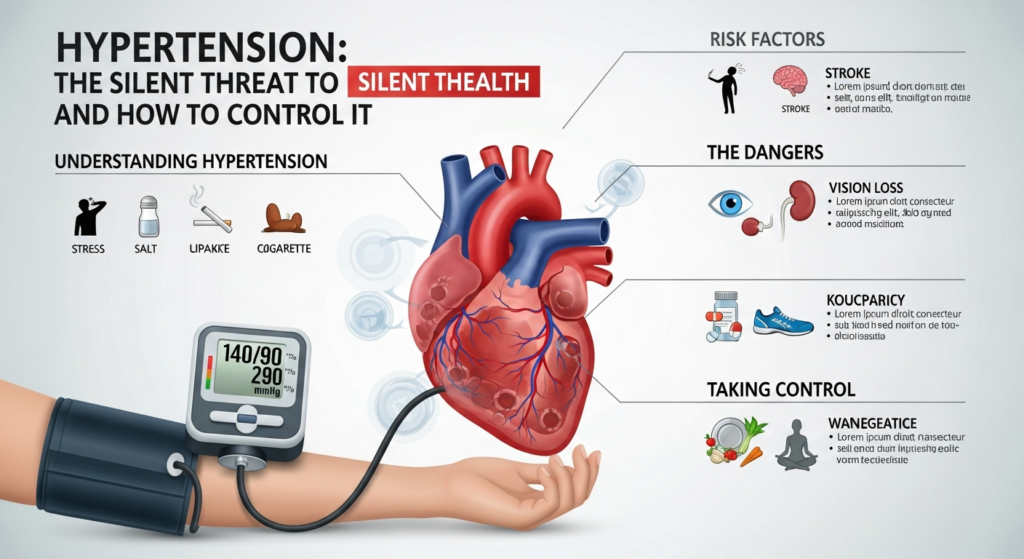
In this article, we will explore what hypertension is, why it happens, its symptoms, risks, diagnosis, treatment options, and most importantly, how it can be prevented and managed through healthy lifestyle choices.
What Is Hypertension Are The Silent Threat?
Blood pressure is the force exerted by circulating blood against the walls of the arteries. It is measured using two numbers:
- Systolic pressure – the pressure when the heart contracts
- Diastolic pressure – the pressure when the heart relaxes between beats
A normal blood pressure reading is generally considered to be around 120/80 mmHg.
Hypertension is diagnosed when blood pressure readings are consistently elevated, usually:
- 130/80 mmHg or higher, depending on clinical guidelines
High blood pressure means the heart has to work harder to pump blood, and over time this extra strain causes damage to vital organs.
Types of Hypertension
1. Primary (Essential) Hypertension
This is the most common type and develops gradually over many years. It does not have a single identifiable cause but is linked to genetics, aging, lifestyle factors, and environmental influences.
2. Secondary Hypertension
This type results from an underlying medical condition or medication, such as:
- Kidney disease
- Hormonal disorders
- Certain medications (e.g., steroids, birth control pills)
- Obstructive sleep apnea
Secondary hypertension often appears suddenly and can cause higher blood pressure than primary hypertension.
Causes and Risk Factors
Hypertension develops due to a combination of modifiable and non-modifiable factors.
Non-Modifiable Risk Factors
- Age (risk increases with age)
- Family history of hypertension
- Genetics
- Ethnicity
Modifiable Risk Factors
- High salt (sodium) intake
- Lack of physical activity
- Overweight or obesity
- Smoking
- Excessive alcohol consumption
- Chronic stress
- Poor diet (high in processed and fatty foods)
Understanding these risk factors is essential, as many of them can be controlled with lifestyle changes.
Also read about this: Hypertension The Silent Threat
Why Hypertension Are The Silent Threat
One of the most dangerous aspects of hypertension is that it often causes no noticeable symptoms, even when blood pressure reaches dangerously high levels.
When symptoms do occur, they may include:
- Headaches
- Dizziness
- Blurred vision
- Shortness of breath
- Nosebleeds
- Chest discomfort (in severe cases)
Because symptoms are unreliable, regular blood pressure monitoring is the only reliable way to detect hypertension early.
Health Complications of Uncontrolled Hypertension The Silent Threat
If left untreated, high blood pressure can lead to serious complications, including:
1. Heart Disease
Hypertension increases the risk of:
- Heart attack
- Heart failure
- Enlarged heart
2. Stroke
High blood pressure damages blood vessels in the brain, increasing the risk of both ischemic and hemorrhagic strokes.
3. Kidney Damage
The kidneys rely on healthy blood vessels to filter waste. Hypertension can lead to chronic kidney disease or kidney failure.
4. Vision Loss
Damage to the blood vessels in the eyes may result in hypertensive retinopathy and vision problems.
5. Vascular Disease
Hypertension contributes to hardening and narrowing of the arteries (atherosclerosis), reducing blood flow to vital organs.
How Hypertension Is Diagnosed
Diagnosis involves repeated blood pressure measurements taken on different occasions. Doctors may also use:
- Home blood pressure monitoring
- Ambulatory blood pressure monitoring (24-hour readings)
Additional tests may include:
- Blood and urine tests
- Electrocardiogram (ECG)
- Echocardiogram
- Kidney function tests
These help identify organ damage or secondary causes of hypertension.
Treatment of Hypertension The Silent Threat
Treatment depends on blood pressure levels, risk factors, and overall health. It usually includes a combination of lifestyle changes and medications.
Lifestyle Modifications (First-Line Treatment)
Lifestyle changes are essential and often highly effective:
1. Healthy Diet
- Follow the DASH diet (Dietary Approaches to Stop Hypertension)
- Increase fruits, vegetables, whole grains, and lean proteins
- Reduce salt intake (ideally less than 2,300 mg/day)
- Limit processed and fast foods
2. Regular Physical Activity
- At least 150 minutes of moderate exercise per week
- Activities like walking, cycling, swimming, or yoga
3. Weight Management
Losing even a small amount of weight can significantly reduce blood pressure.
4. Reduce Alcohol and Quit Smoking
- Limit alcohol intake
- Smoking cessation improves overall cardiovascular health
5. Stress Management
- Meditation
- Deep breathing
- Adequate sleep
- Mindfulness practices
Medications for Hypertension
When lifestyle changes are not enough, doctors may prescribe medications such as:
- Diuretics
- ACE inhibitors
- Angiotensin II receptor blockers (ARBs)
- Calcium channel blockers
- Beta-blockers
Medication choice depends on individual needs and should always be taken under medical supervision.
Hypertension The Silent Threat in Young People
Hypertension is no longer limited to older adults. Increasing rates of obesity, sedentary lifestyles, and poor diets have led to higher blood pressure even in adolescents and young adults.
Early detection and prevention are crucial to reduce long-term health risks.
Prevention: The Best Strategy
The good news is that hypertension is largely preventable. Simple daily habits can make a powerful difference:
- Eat balanced, nutritious meals
- Stay physically active
- Monitor blood pressure regularly
- Manage stress
- Avoid tobacco and excessive alcohol
Making small, consistent changes can protect your heart and overall health for years to come.
Final Thoughts OF Hypertension The Silent Threat
Hypertension is a serious but manageable condition. Its silent nature makes awareness and regular screening essential. With the right combination of knowledge, lifestyle changes, and medical care, high blood pressure can be controlled effectively. At Healthy Tips, we believe that prevention begins with education. Taking charge
If you face any problem contact with doctor: https://www.marham.pk/doctors/general-physician
What is hypertension and why is it dangerous?
Hypertension is a condition where blood pressure remains consistently high. It is dangerous because it puts extra strain on the heart and blood vessels, increasing the risk of heart disease, stroke, kidney damage, and vision problems, often without noticeable symptoms.
Can hypertension be cured permanently?
Hypertension usually cannot be cured permanently, but it can be effectively controlled. With healthy lifestyle changes and, when necessary, medications, most people can maintain normal blood pressure and prevent complications.
What foods should people with hypertension avoid?
People with hypertension should limit foods high in salt, saturated fats, and added sugars. This includes processed foods, fast food, fried items, canned soups, salty snacks, and sugary beverages.
How often should blood pressure be checked?
Adults should check their blood pressure at least once a year. Those with high blood pressure, risk factors, or existing heart conditions should monitor it more frequently, as advised by a healthcare professional.
Can young people get hypertension?
Yes. Hypertension can affect young adults and even teenagers, especially due to poor diet, lack of exercise, obesity, stress, and family history. Early detection and healthy habits are key to prevention.