Losing weight is not just about eating less Weight Loss Diet Plan Foods, Portions, and Healthy Habits about eating right, moving your body, and building habits that support better health. A weight loss diet plan focuses on achieving a calorie deficit, meaning your body burns more calories than you consume. When you consistently do this through balanced meals, exercise, and healthy lifestyle choices, the body begins to use stored fat for energy, leading to weight loss.
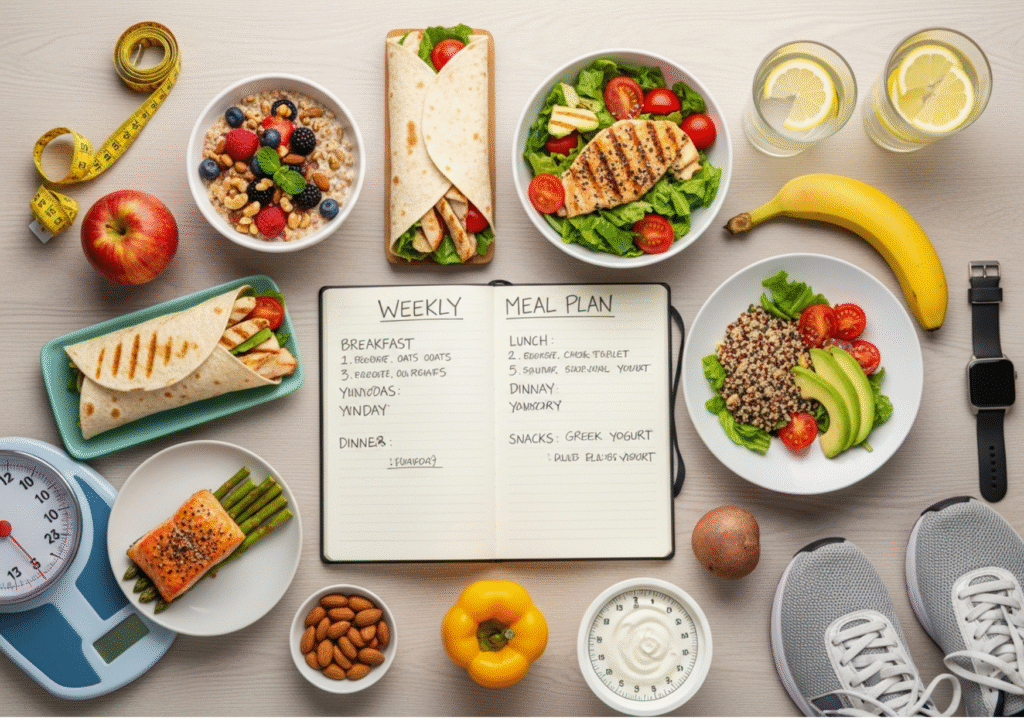
Many people struggle with weight because of high-calorie foods, stress eating, irregular meals, lack of exercise, sugary drinks, and poor sleep patterns. Understanding these habits is the first step toward change.
How Weight Loss Happens
Your body uses calories for daily activity breathing, walking, thinking, and even sleeping.
If you eat more calories than your body needs, the extra calories are stored as fat.
If you eat fewer calories than your body burns, the body starts burning stored fat weight loss begins.
However, starving is never the solution. It slows metabolism and leads to weakness and weight gain later.
The key is balanced, nutritious, portion-controlled meals.
Also read about this: Weight Loss Diet Plan
Daily Meal Plan With Portion Sizes
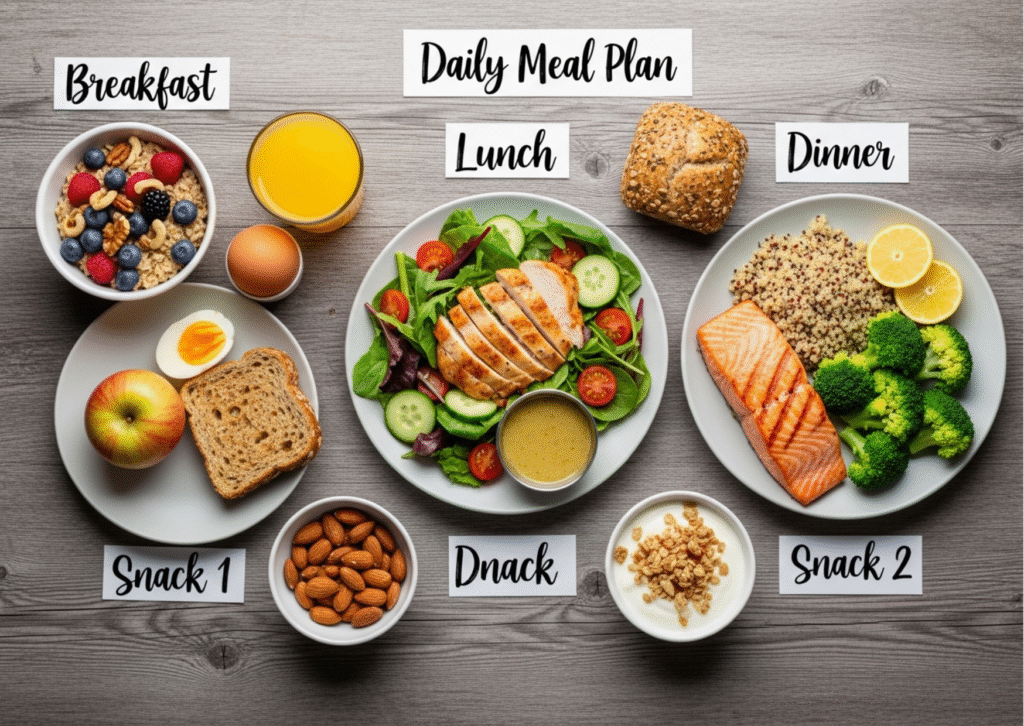
Use simple household measurements:
- 1 cup = standard tea cup
- 1 bowl = medium katori
- 1 handful = your own hand measurement
Breakfast (Choose one)
| Option | Portion |
| Oatmeal with skim milk + fruits | 1 bowl |
| Boiled eggs + 1 slice brown bread | 2 eggs + 1 slice |
| Vegetable upma or poha | 1 bowl |
| Yogurt + 1 handful nuts | 1 cup + 1 handful |
Tip: Avoid sugary tea. Take green tea / herbal tea instead.
Mid-Morning Snack
- 1 fruit (apple, banana, orange, guava)
- OR 6–8 soaked almonds
Lunch
| Food | Portion |
| Whole grains (roti / brown rice) | 1–2 small rotis OR 1 cup rice |
| Dal or Grilled Chicken / Fish | 1 bowl dal OR 100g chicken/fish |
| Cooked vegetables / salad | 1–2 servings |
| Curd / Yogurt | ½ cup |
Tip: Avoid deep-fried foods and heavy gravies.
Evening Snack
- Green tea with roasted Chana / makhana
- OR vegetable soup (1 bowl)
Dinner (Lightest meal of the day)
| Food | Portion |
| Vegetable soup + salad | 1 bowl + 1 plate |
| OR Grilled fish/chicken + veggies | 100g + 1 cup |
| OR 1 bowl khichdi + salad | 1 bowl |
Tip: Eat dinner 2–3 hours before sleep.
Remember: https://healthytipspro.com/tuberculosis-causes-and-how-it-spread/
7-Day Sample Meal Chart
| Day | Breakfast | Lunch | Dinner |
| Mon | Oatmeal + fruit | Roti + Dal + Veggies | Vegetable Soup + Salad |
| Tue | Boiled eggs + tea | Brown rice + Chicken + Salad | Grilled fish + Stir Veg |
| Wed | Upma / Paha | Roti + Dal + Curd | Moong dal khichdi + Veggies |
| Thu | Yogurt + nuts | Rice + Lentils + Veggies | Chicken Soup + Salad |
| Fri | Smoothie (fruit + milk) | Roti + Veg Curry + Salad | Veg Soup + Oats |
| Sat | Egg omelet + tea | Fish curry + Rice | Moong dal + Stir Veg |
| Sun | Paratha (no oil) + yogurt | Veg pulao + Salad | Light khichdi + Curd |
Foods to Eat vs. Avoid
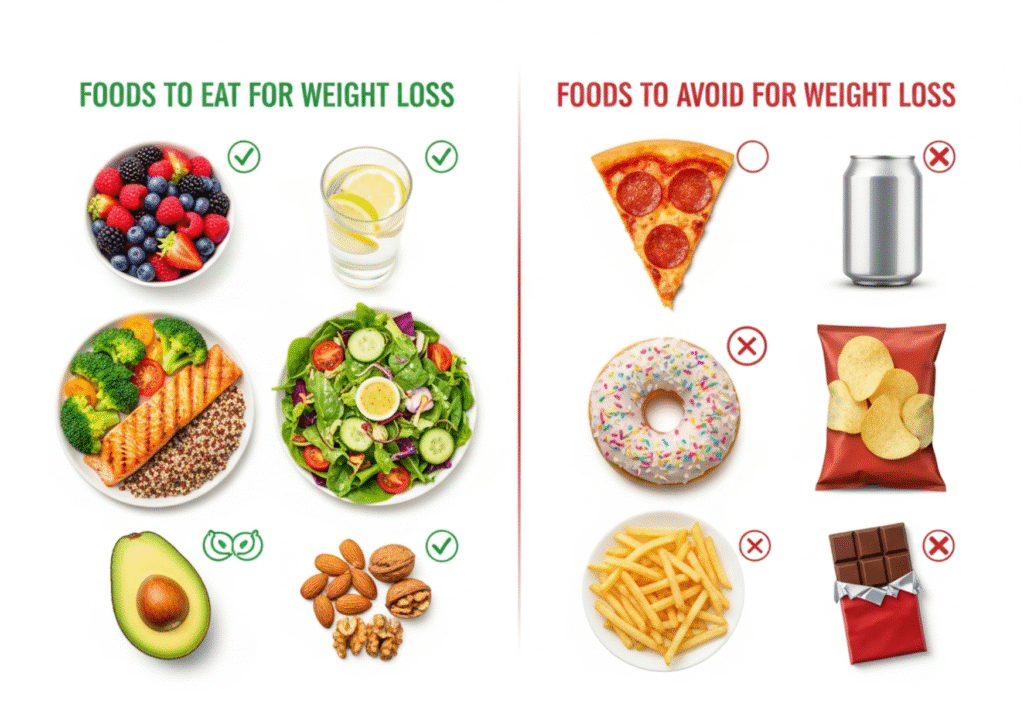
| Eat More | Avoid / Limit |
| Fresh fruits & vegetables | Fried foods |
| Whole grains (roti, oats, brown rice) | White bread, bakery items |
| Lean proteins (dal, eggs, fish, chicken) | Sugary drinks, soft drinks |
| Nuts & seeds (small amounts) | Chips, fast food, packaged snacks |
| Water, herbal teas | Sweets, chocolates, ice cream |
Role of Exercise
No weight loss diet works without movement.
| Activity | Time |
| Brisk walking | 30–45 minutes daily |
| Yoga or stretching | 10–20 minutes |
| Strength training (light weights) | 3–4 days/week |
Strength training increases muscle, which boosts metabolism and burns fat faster.
Hydration, Sleep & Stress Control
| Health Factor | Importance |
| Water: 8–10 glasses/day | Prevents overeating & improves digestion |
| Sleep: 7–8 hours/night | Poor sleep increases hunger hormones |
| Stress Management: Meditation / prayer / breathing | Controls emotional eating |
Common Challenges & Solutions
| Problem | Solution |
| Cravings | Drink water, chew slowly, eat fruit |
| Slow progress | Be consistent; weight loss is gradual |
| Emotional eating | Take a walk, talk to someone, practice deep breathing |
| Boredom in diet | Rotate foods weekly; try spices & herbs |
Doctors’ Roles in Weight Loss Care (Table)
| Doctor Type | Role in Weight Loss Management | When to Consult |
| General Physician (GP) | Performs initial evaluation, checks BMI, reviews lifestyle habits, and provides basic diet & exercise guidance. | When starting your weight loss journey or needing general advice. |
| Dietitian / Nutritionist | Creates a personalized diet plan, portion control guide, calorie deficit plan, and monitors food-related progress. | If you need a structured meal plan or have difficulty controlling food portions. |
| Endocrinologist (Hormone Specialist) | Diagnoses and treats hormonal causes of weight gain like thyroid disorders, PCOS, insulin resistance, or metabolic syndrome. | If you suspect thyroid issues, irregular periods, slow metabolism, or unexplained weight gain. |
| Bariatric Specialist / Obesity Medicine Doctor | Manages severe obesity, evaluates non-surgical treatment options, and may prescribe medical therapy for weight loss. | If BMI > 30 and regular diet/exercise is not working. |
| Bariatric Surgeon | Performs weight loss surgeries such as gastric bypass or sleeve gastrectomy when lifestyle changes do not help. | If BMI > 35 with serious health risks (diabetes, sleep apnea, heart disease). |
| Fitness Trainer / Physiotherapist | Designs safe and effective exercise routines, promotes fat loss, strength training, and posture improvement. | To avoid injury, boost metabolism, and maintain physical activity. |
| Psychologist / Therapist | Helps manage emotional eating, stress eating, depression, and body image concerns through counseling. | If stress or emotions trigger overeating or binge eating. |
Conclusion
Weight loss is not about strict dieting it is about better habits.
When you choose real foods, move your body daily, drink water, manage stress, and sleep well, the body naturally returns to a healthier weight.
Small steps done consistently lead to big results.
Be patient. Be kind to yourself. Progress matters more than perfection.
Appoint Doctor:
Need Help Losing Weight? Talk to a Nutrition & Weight Management Doctor Today.
Book Appointment: Nutritionist
How much weight is safe to lose per week?
It is generally safe to lose 0.5 to 1 kg (1–2 lbs) per week. Losing weight too quickly can harm metabolism and muscle health.
Do I have to stop eating rice or bread to lose weight?
No. You don’t need to completely avoid them. Just control portion size and choose whole grain options to stay full longer.
Is exercise necessary for weight loss?
Yes. While diet controls calories, exercise boosts metabolism, burns fat, and tones muscles. Even 30 minutes of walking daily helps.
Can drinking more water reduce weight?
Yes. Drinking enough water reduces hunger, improves digestion, and helps the body burn calories more efficiently. Aim for 6–8 glasses per day.
Why am I not losing weight even though I am dieting?
Weight loss can stall due to hidden calories, stress, poor sleep, hormones, or lack of muscle activity. Reviewing your diet and lifestyle helps restart progress.
Pingback: Nutrition: Nourishing Your Body for a Healthier Life