Bacterial diseases are among the most common health problems affecting people around the world. They can range from mild infections like sore throat or skin infection to serious, life-threatening conditions such as tuberculosis, pneumonia, or sepsis. Understanding what bacteria are, how they spread, and how infections are treated is essential for protecting our health.
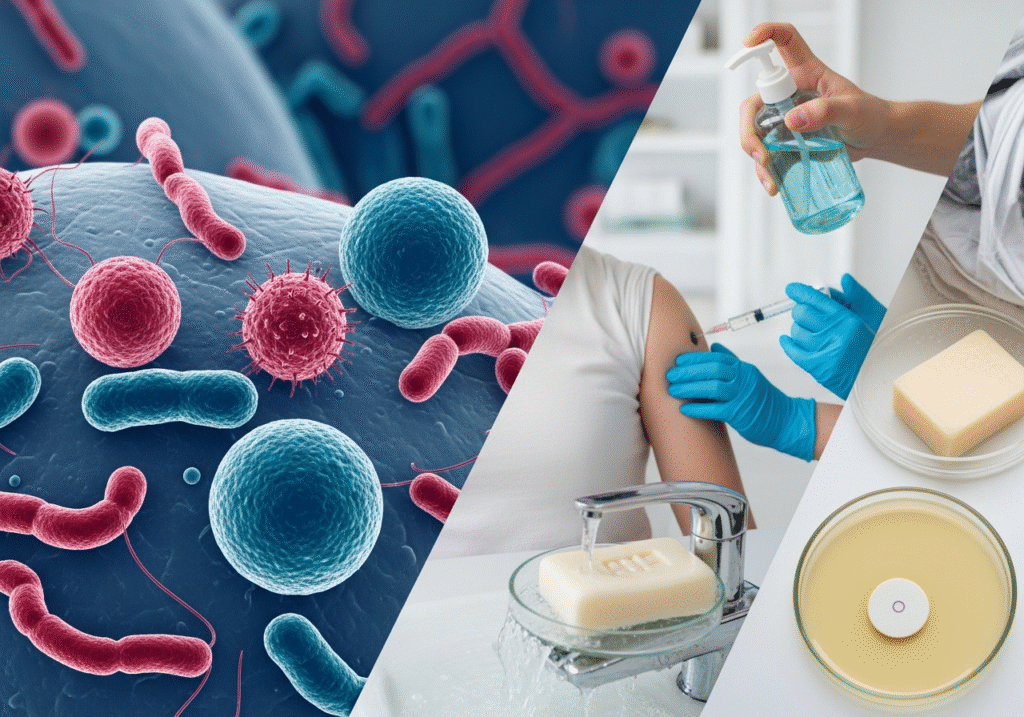
This article explains bacterial diseases in simple, clear language suitable for students, parents, and general readers, while still maintaining professional medical accuracy.
What Are Bacteria?
Bacteria are tiny microscopic organisms that are found everywhere on Earth. They live:
- In air
- In water
- In soil
- On plants and animals
- Inside the human body
Not all bacteria are harmful. In fact, many bacteria are beneficial:
- They help with digestion in the intestines.
- They produce vitamins like Vitamin K.
- They protect the body from harmful germs.
However, some bacteria are pathogenic, meaning they can cause disease when they enter the body, multiply, and damage tissues.
Also read about this: Bacterial Diseases
How Do Bacterial Infections Occur?
Bacterial infections occur when harmful bacteria enter the body through:
- Mouth (contaminated food or water)
- Nose (airborne droplets)
- Skin (cuts, wounds, insect bites)
- Intimate contact (sexual transmission)
Once inside, the bacteria multiply and may release toxins, causing symptoms such as fever, pain, and swelling.
Global Impact of Bacterial Diseases
Millions of people around the world suffer from bacterial infections every year. These diseases are more common in:
- Overcrowded areas
- Places with poor sanitation and unsafe water
- Regions with limited healthcare
- Populations with weak immune systems (children and elderly)
For example:
- Tuberculosis affects nearly 10 million people annually worldwide.
- Diarrheal diseases caused by bacteria kill over 500,000 children every year.
This makes bacterial infections a major public health concern.
Remember: https://healthytipspro.com/how-genetic-disorders-a-clear-introduction-to-genes-cause-disease/
How Bacterial Diseases Spread
Bacteria can spread from person to person or through the environment. Common ways of transmission include:
| Mode of Spread | Examples |
| Air (coughing, sneezing) | Tuberculosis, Pneumonia |
| Contaminated water or food | Typhoid, Cholera, Food poisoning |
| Physical contact | Skin infections, STDs |
| Shared surfaces and objects | Wound infections, meningitis risk |
| Insects and animals | Lyme disease, Plague |
| Unsafe medical practices | Injection infections, hospital spread |
Common Symptoms of Bacterial Infections
Symptoms vary depending on the part of the body affected, but common signs include:
- Fever
- Fatigue and weakness
- Pain and swelling
- Cough or breathing problems
- Diarrhea or vomiting
- Skin redness, boils, or wounds
- Sore throat
- Warm or tender areas of infection
If these symptoms become severe or persistent, medical attention is needed.
Types of Bacterial Diseases & Examples
Below are some major categories of bacterial diseases, explained simply.
1. Respiratory Bacterial Infections
a) Tuberculosis (TB)
- Cause: Mycobacterium tuberculosis
- Spread: Airborne droplets when an infected person coughs
- Symptoms: Chronic cough, chest pain, weight loss, night sweats, fever
- Risk Groups: Close-contact families, weak immune systems, smokers
b) Pneumonia
- Cause: Streptococcus pneumoniae (most common)
- Symptoms: High fever, difficulty breathing, chest pain, productive cough
- Risk Groups: Elderly, infants, people with chronic illness
c) Whooping Cough (Pertussis)
- Cause: Bordetella pertussis
- Symptoms: Severe coughing fits with a “whooping” sound
- Risk Groups: Unvaccinated children
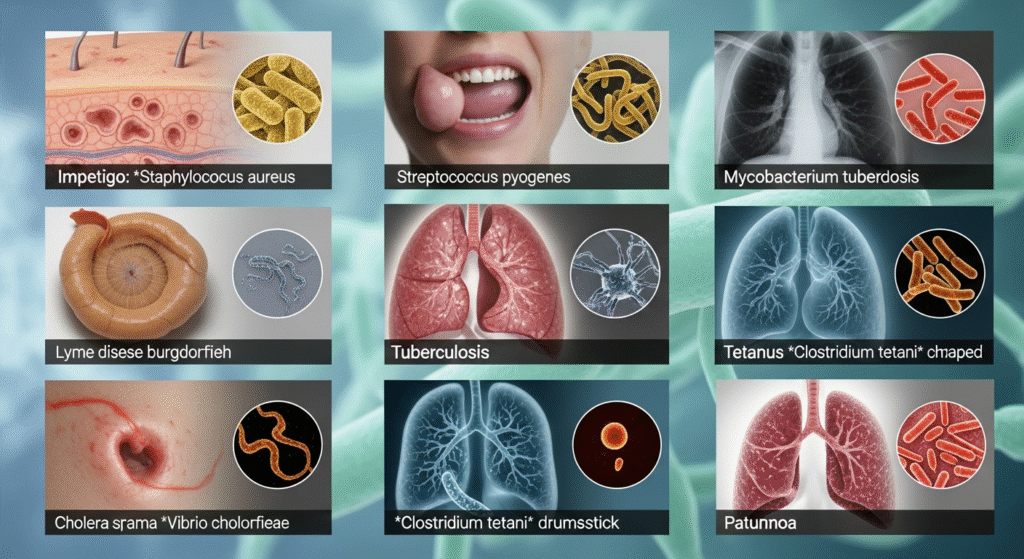
2. Digestive System Bacterial Infections
a) Typhoid Fever
- Cause: Salmonella typhi
- Spread: Contaminated food and water
- Symptoms: High fever, abdominal pain, constipation or diarrhea
- Risk Groups: Areas without clean drinking water
b) Cholera
- Cause: Vibrio cholerae
- Spread: Contaminated water
- Symptoms: Severe watery diarrhea, dehydration
- Risk Groups: Emergency camps, poor sanitation areas
c) Food Poisoning
- Cause: E. coli, Staphylococcus, Salmonella, etc.
- Symptoms: Vomiting, abdominal cramps, diarrhea
- Risk Groups: Anyone eating spoiled or improperly cooked food
3. Skin and Wound Infections
Cellulitis
- Cause: Streptococcus or Staphylococcus bacteria
- Symptoms: Red, swollen, painful skin patch
- Risk Groups: Diabetics, injury or surgical wounds
Boils (Furuncle)
- Cause: Staphylococcus aureus
- Symptoms: Painful, pus-filled swelling on skin
- Risk Groups: Poor hygiene, weak immunity
4. Sexually Transmitted Bacterial Diseases
a) Syphilis
- Cause: Treponema pallidum
- Spread: Unprotected sexual contact
- Symptoms: Sores, rash, nerve/organ damage (in later stages)
b) Gonorrhea
- Cause: Neisseria gonorrhoeae
- Symptoms: Pain while urinating, discharge
- Risk Groups: Sexually active young adults
5. Blood and Brain Infections
Sepsis
- Cause: Bacteria spreading into blood
- Symptoms: Fever, confusion, rapid heartbeat, organ failure
- Emergency Condition
Meningitis
- Cause: Neisseria meningitidis or Streptococcus pneumoniae
- Symptoms: Severe headache, stiff neck, sensitivity to light
Diagnosis of Bacterial Diseases
Doctors use several methods:
| Test Type | Purpose |
| Physical Examination | Identify visible symptoms |
| Blood Tests | Detect bacterial infection markers |
| Urine/Stool Cultures | Identify type of bacteria |
| Swab Tests (throat, wound) | Confirm infection source |
| X-Ray / Ultrasound | Check affected internal organs |
Treatment of Bacterial Diseases
1. Antibiotics
- Antibiotics kill bacteria or stop their growth.
- Important: Only use antibiotics if prescribed.
- Never self-medicate. Wrong use can cause severe harm.
2. Rest and Hydration
The body needs energy to fight infection.
3. Fever and Pain Management
Medications like paracetamol or ibuprofen may be used (if advised by a doctor).
4. Hospital Treatment
Severe infections may require:
- IV antibiotics
- Oxygen therapy
- Surgery (for abscess removal)
Antibiotic Resistance – A Serious Growing Problem
Antibiotic resistance happens when bacteria adapt and stop responding to medicines.
This is mainly caused by:
- Overuse of antibiotics
- Not finishing prescribed doses
- Using antibiotics without a doctor’s advice
This makes infections harder to treat and more dangerous.
To prevent resistance:
- Only take antibiotics prescribed by a doctor.
- Complete the full course.
- Never share medicines with others.
Prevention & Control Measures
- Wash hands regularly with soap
- Drink clean, boiled, or filtered water
- Cook food thoroughly and store it safely
- Keep surroundings clean and dry
- Use vaccines where available (e.g., TB, DPT, Typhoid)
- Avoid close contact with sick individuals
- Maintain personal hygiene
- Do not use antibiotics without a prescription
Summary & Health Tips
Bacterial diseases are common but can be prevented and treated when understood properly. While some bacteria are harmless or even helpful, harmful bacteria can cause infection when they enter the body. Proper sanitation, clean food and water, vaccination, and responsible antibiotic use are key to staying healthy.
Simple Daily Tips
- Drink safe water
- Wash hands often
- Eat fresh, properly cooked food
- Keep your home clean
- Finish your prescribed medicines fully
Appoint Doctor:
Book Your Appointment with a General Physician: Click Here
What causes bacterial diseases?
Bacterial diseases are caused when harmful bacteria enter the body through air, food, water, wounds, or physical contact. These bacteria multiply and release toxins that damage tissues and cause illness.
How do bacterial infections spread?
They can spread through coughing, sneezing, contaminated food or water, shared surfaces, skin contact, insect bites, or unsafe hygiene practices.
What are the common symptoms of bacterial infections?
Common symptoms include fever, fatigue, pain, swelling, diarrhea, coughing, vomiting, and redness or pus in the infected area.
How are bacterial diseases treated?
Treatment usually involves antibiotics prescribed by a doctor. Rest, hydration, and fever management are also important. Severe cases may require hospital care.
Can bacterial diseases be prevented?
Yes. Prevention includes washing hands regularly, drinking clean water, cooking food properly, staying vaccinated, and avoiding self-medication with antibiotics to prevent resistance.
Pingback: Understanding Viral Diseases and How They Spread