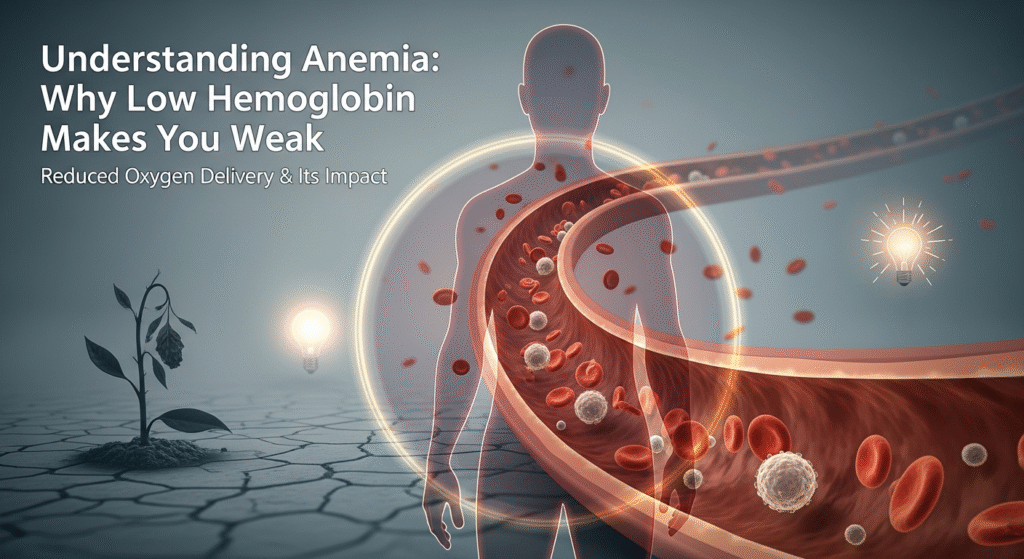
Understanding Anemia is one of the most common nutritional and medical conditions worldwide. It affects millions of children, women, and adults, especially in developing countries. According to the World Health Organization (WHO), more than 1.8 billion people globally suffer from anemia, making it a major public health concern. Many people may feel tired, weak, or breathless but do not know the real reason and often, the reason is low hemoglobin.
This article explains anemia in a simple, clear, and student-friendly way, while also keeping the accuracy of medical knowledge. It will help students, parents, and general readers understand what anemia is, what causes it, how it looks, how it is diagnosed, and how it can be treated and prevented.
What is Anemia?
Anemia is a medical condition in which the hemoglobin level in the blood becomes lower than normal. Hemoglobin is a protein found in red blood cells (RBCs). Its main job is to carry oxygen from the lungs to all parts of the body.
Why is Hemoglobin Important?
- Oxygen is needed by every cell in the body to produce energy.
- When hemoglobin is low, the body receives less oxygen.
- As a result, a person feels tired, weak, dizzy, or breathless even with normal activities.
In simple words:
Low hemoglobin = low oxygen = low energy = weakness
Also read about this: Understanding Anemia
How Common is Anemia Worldwide?
- Over 1.8 billion people have anemia.
- Women and children are affected the most.
- One out of every three women of reproductive age is anemic.
- About 40% of children under age 5 worldwide develop anemia, especially due to iron deficiency.
This makes anemia one of the most widespread nutritional diseases in the world.
Main Causes of Anemia
Anemia can occur due to many reasons. The most common ones include:
1. Iron Deficiency
- Iron is needed to form hemoglobin.
- Lack of iron in the diet is the leading cause of anemia.
- Common in children, teenage girls, and pregnant women.
2. Poor Nutrition
- Lack of iron, vitamin B12, or folic acid in food.
- People who skip meals or depend on junk food are at high risk.
3. Blood Loss
- Heavy periods in women.
- Internal bleeding (stomach ulcers, colon diseases).
- Accidents or surgeries causing blood loss.
4. Pregnancy
- The body needs more iron to support the baby.
- Without supplements, anemia is very common.
5. Chronic Diseases
- Kidney disease, cancer, infections, and autoimmune disorders can reduce RBC production.
6. Genetic Conditions
Some people inherit blood diseases, such as:
- Sickle Cell Anemia
- Thalassemia
These affect hemoglobin quality and function.
Remember: https://healthytipspro.com/what-is-kwashiorkor-disease-complete-guide-for-students-and-parents/
Clinical Manifestations
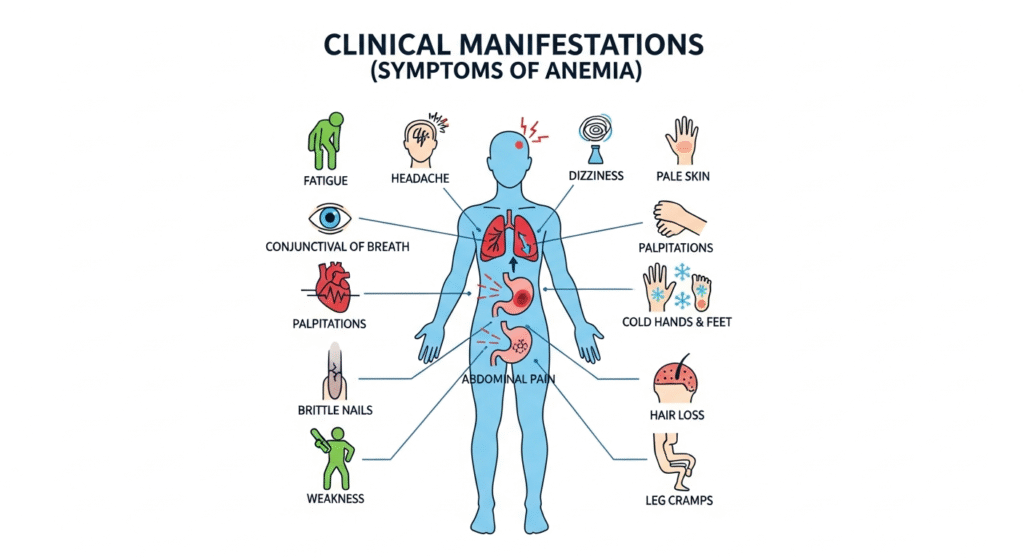
Anemia symptoms may develop slowly or suddenly, depending on the cause. Common signs include:
- Constant tiredness and weakness
- Pale skin, especially on lips, nails, and inner eyelids
- Dizziness or light-headedness
- Shortness of breath even during light work
- Rapid or irregular heartbeat
- Cold hands and feet
- Hair fall and weak nails
- Difficulty concentrating
- Irritability or mood swings
- Poor growth and low school performance in children
In severe cases:
- Chest pain
- Fainting
- Swelling in legs
Types of Anemia
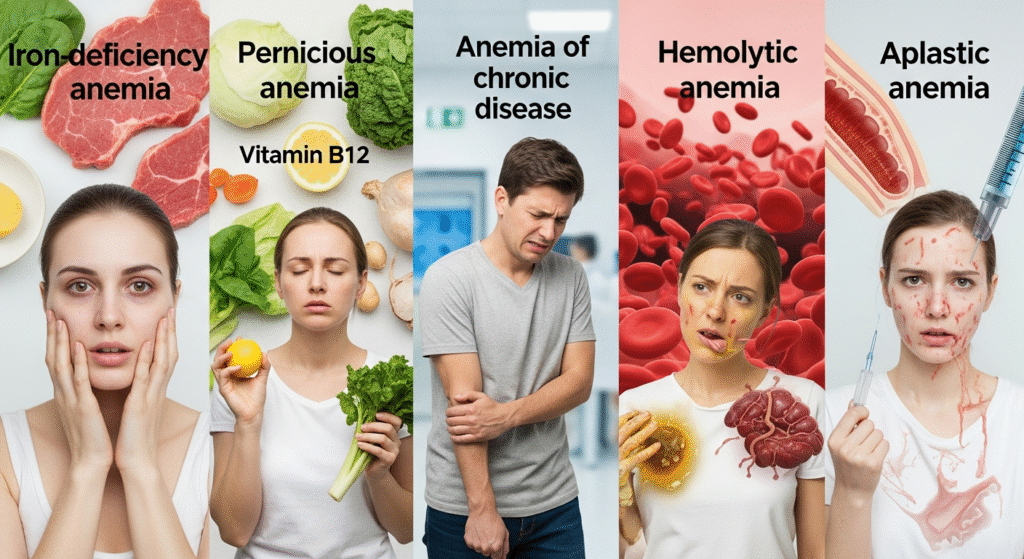
There are many types, but the four most common are:
1. Iron Deficiency Anemia
- Caused by lack of iron in food or blood loss.
- Most common type globally.
- Treated with iron supplements and iron-rich diet.
2. Vitamin B12 Deficiency Anemia
- B12 is needed to form healthy red blood cells and nerves.
- Common in vegetarians and elderly people.
- Symptoms may include numbness or tingling in hands and feet.
3. Folic Acid Deficiency Anemia
- Folic acid helps in RBC formation.
- Deficiency is common in poor nutrition or pregnancy.
4. Sickle Cell Anemia (Genetic)
- The body makes abnormal sickle-shaped RBCs.
- These cells break easily and block blood flow.
- Lifelong condition requiring medical management.
5. Aplastic Anemia
- Bone marrow stops producing RBCs entirely.
- Rare but serious.
- Needs specialized treatment.
How is Anemia Diagnosed?
Doctors diagnose anemia through blood tests such as:
| Test Name | Purpose |
|---|---|
| CBC (Complete Blood Count) | Measures overall RBC and hemoglobin levels |
| Hemoglobin Test | Shows how much hemoglobin is present |
| Serum Iron/Ferritin | Measures iron storage in the body |
| Vitamin B12 and Folate Tests | Detect vitamin deficiency |
| Peripheral Blood Smear | Examines RBC shape |
Treatment of Anemia
Treatment depends on the cause, but usually includes:
1. Iron Supplements
- Prescribed as tablets or syrups.
- Must be taken after meals to avoid stomach upset.
- Treatment continues for 3 6 months to restore iron stores.
2. Vitamin B12 or Folic Acid Supplements
- Given when deficiency is detected.
3. Diet Improvement
Include iron-rich foods daily (food chart below).
4. Treating Blood Loss
- Managing heavy menstrual bleeding.
- Treating ulcers or digestive bleeding.
5. Treatment for Chronic or Genetic Anemia
- May require blood transfusions, medication, or specialized therapy.
Iron-Rich Food Chart
| Food Group | Examples | Why Helpful |
|---|---|---|
| Leafy Greens | Spinach, kale, mustard leaves | High in iron and folic acid |
| Proteins | Eggs, fish, chicken, red meat | Improve hemoglobin levels |
| Pulses and Beans | Lentils (daal), chickpeas, kidney beans | Excellent plant-based iron |
| Nuts and Seeds | Almonds, sesame seeds, pumpkin seeds | Improve blood formation |
| Fruits | Dates, pomegranates, apples, bananas | Support blood health |
| Vitamin C Foods | Lemon, oranges, guava | Help iron absorption |
Tip:
Combine iron foods + vitamin C foods for better absorption
Example: Eat spinach + lemon juice together.
Prevention of Anemia
- Eat a balanced diet with iron, protein, and vitamins.
- Avoid junk food and sugary snacks.
- Drink milk, but not with iron tablets (it reduces absorption).
- Encourage breastfeeding in infants.
- Adolescent girls and pregnant women should take doctor-recommended iron supplements.
- Get regular hemoglobin tests, especially during pregnancy.
- Manage menstrual health and treat heavy periods early.
Summary
Anemia is a common but preventable condition caused mainly by low iron and poor nutrition. Hemoglobin is essential for carrying oxygen, and when its level drops, the body becomes weak and tired. By understanding the causes and symptoms, getting proper diagnosis, improving diet, and following medical treatment, anemia can be effectively managed and prevented.
Healthy blood means a healthy body.
Eat well, stay active, and protect your energy.
Appoint Doctor:
Book Your Appointment with a Hematologist Today: Click Here
What is the main cause of anemia?
The most common cause of anemia is iron deficiency. When the body does not get enough iron from food or loses blood (such as during heavy menstruation), the hemoglobin level drops. Poor diet, pregnancy, and chronic diseases can also lead to anemia.
What are the early signs that someone may have anemia?
Early symptoms include:
Tiredness and weakness
Pale skin and lips
Dizziness or headaches
Shortness of breath during normal activity
If these symptoms are noticed, a blood test should be done.
How is anemia diagnosed?
Anemia is diagnosed through blood tests, mainly:
CBC (Complete Blood Count)
Hemoglobin Level Test
Serum Ferritin or Iron Tests
These tests help doctors determine the type and severity of anemia.
Can anemia be treated at home with diet only?
Mild anemia can improve with iron-rich foods such as spinach, eggs, lentils, dates, and red meat.
However, moderate to severe anemia usually needs iron supplements or medical treatment, prescribed by a doctor.
Who is most at risk of developing anemia?
People most at risk include:
Women, especially those with heavy menstrual periods
Pregnant women
Children and teenagers with rapid growth
People who do not eat a balanced diet
Individuals with chronic medical conditions
Pingback: How Genetic Disorders-A Clear Introduction to Genes Cause Disease - Health Tips